
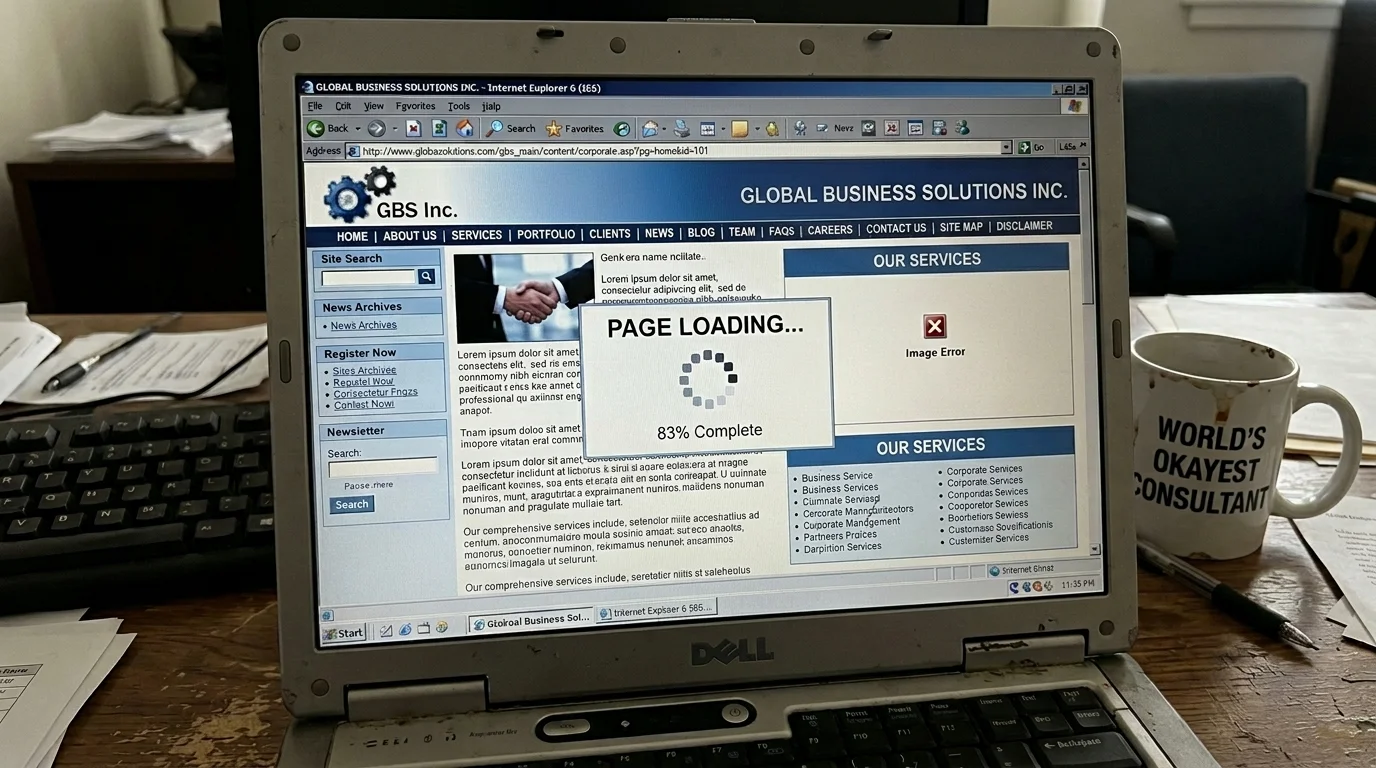
A website redesign is more than changing colours, replacing images or giving your homepage a newer appearance. It can involve significant changes to your website’s structure, layout, functionality, content and technical foundation.
If your current website is slow, difficult to use, poorly optimised for mobile devices or no longer reflects your brand, a redesign may be the right solution. However, the process needs careful planning because changes to URLs, content and site architecture can also affect organic visibility.
In simple terms, you should redesign your website when its design, functionality or performance is preventing it from meeting user expectations or business goals. Outdated design, poor user experience, high bounce rates, low conversion rates, weak mobile responsiveness and declining search performance are all potential warning signs.
A well-planned redesign and can create a more user friendly experience, strengthen search engine optimisation and help turn more visitors into customers.
What Is a Website Redesign?
A website redesign typically involves significant changes to structure and visuals. Depending on the condition of the existing site, it can range from improving selected website pages to a full website redesign involving new layouts, content, functionality, technology and site architecture.
A redesign is different from a website refresh. A refresh focuses mainly on surface-level updates such as images, copy, colours and other visual elements. A website refresh updates visual elements and minor user experience. A redesign, by contrast, may change the layout, structure, functionality and underlying code.
This distinction matters when deciding how much work your business actually needs. If your website is technically sound but its visual appearance feels dated, a refresh may be enough. If navigation is confusing, pages are difficult to manage, mobile performance is poor and the content structure no longer matches your target audience, a more substantial site redesign is likely to deliver greater value.
The scope can also depend on your website type. An ecommerce website redesign, for example, may require careful work across product pages, category structures, checkout functionality, payment systems and customer journeys. A service-based business may instead need stronger landing pages, clearer calls-to-action and improved lead-generation journeys.
When Does Your Website Need a Redesign?
There is no universal expiry date for a website, but most businesses should redesign every two to three years as a general guideline. That does not mean every website must be completely rebuilt after three years. A well-maintained site can remain effective for longer, while a poorly performing website may need attention much sooner.
The more useful approach is to look at measurable signs that your website is no longer doing its job.
Outdated Design and Poor User Experience
Outdated design can signal the need for a redesign, particularly when competitors provide faster, clearer and more intuitive online experiences. Users often form an impression of a business from its website before they speak to anyone, so an interface that looks neglected can affect trust and engagement.
A poor user experience can also result from confusing menus, inconsistent design elements, difficult forms or content that is hard to find. If visitors cannot quickly understand what you offer or what they should do next, redesigning your website may help remove those barriers.
Low Conversion Rates
A redesign is needed if conversion rates are low, particularly when analytics show that visitors are arriving but failing to complete important actions.
The problem may not always be the design itself. Your landing pages might lack a clear value proposition, your calls-to-action may be difficult to find, or users may have to navigate through too many steps before contacting you. A redesign can lead to higher conversion rates by simplifying navigation and improving calls-to-action.
High Bounce Rates and Weak Engagement
High bounce rates indicate a potential need for redesign. However, bounce rate should be considered alongside other data rather than treated as proof that the website or web application is failing.
For example, visitors may leave because a page loads slowly, does not answer their search intent or is difficult to use on a mobile device. Reviewing user journeys, engagement and conversion data can help identify what is actually causing the problem.
Poor Mobile Responsiveness
Mobile responsiveness ensures that the website functions smoothly on smartphones and tablets. This is particularly important because users increasingly expect websites to work properly regardless of the device they use.
A website that requires excessive zooming, has buttons that are difficult to tap or displays broken layouts on smaller screens can quickly create frustration. Mobile optimization should therefore be considered from the beginning of the redesign process rather than added at the end.
Declining SEO Performance
A website can have an attractive design and still struggle to appear in search results. Declining search rankings, organic traffic or visibility may indicate problems with technical SEO, content quality, internal linking, site speed or website structure.
A technical SEO audit can reveal performance issues needing redesign. It can also help distinguish between problems that require a complete rebuild and issues that can be fixed without changing the whole website.
Why Redesign Your Website?
The purpose of website redesign services should be linked to a measurable business need. Simply making a website look newer is not a strong enough reason to invest in a redesign project.
Improve User Experience and Engagement
A better website should make it easier for visitors to find information, understand your services and complete important actions. Clear navigation, logical content structures, responsive design and accessible interfaces all contribute to a more seamless user experience.
User expectations also change over time. What felt intuitive several years ago may now create unnecessary friction. Reviewing the customer journey can reveal opportunities to simplify the experience.
Strengthen Your Brand Identity
Your website should reflect your current brand identity rather than an older version of your business. Changes to your services, positioning, audience or visual language may require a corresponding change to the website.
A redesign can bring typography, imagery, messaging, colours and other design elements together into a consistent experience across the site and your wider digital presence.
Improve Website Performance

Site speed, technical stability and responsive design all affect how people interact with a website. A redesign can provide an opportunity to clean up legacy code, improve technical aspects and address functionality that has become difficult to maintain.
It can also provide the foundation for custom web development where existing software or a content management system is limiting what the business needs to achieve.
Support Better SEO
So, does website redesign affect SEO? It can.
A redesign can impact SEO if URLs change. Changes to page content, internal linking, site architecture, metadata and technical configuration can also influence how search engines understand and rank a website.
This does not mean redesigns should be avoided. It means SEO needs to be considered as part of the redesign strategy rather than after the new website has gone live. Website redesign SEO optimisation should be implemented early in the process.
SEO performance can also improve when a redesign removes unnecessary code, improves site speed, strengthens metadata and creates a clearer structure for search engines and users.
How to Plan a Website Redesign?
Before discussing colours, layouts or development, establish what the redesign needs to achieve. Set measurable goals for your website redesign. These goals should connect directly to business outcomes and user needs.
For example, a business might want to increase qualified enquiries, improve organic traffic, reduce friction on key landing pages or make its website easier to manage internally. Each objective should have a corresponding metric so that the redesigned website can be evaluated properly.
Smart Digitants takes a data-led approach to web development and digital marketing strategies, combining customised web solutions with user-centric design and performance-focused strategies. Its web development process starts by understanding client requirements and business goals before moving into UI/UX design and development.
Set Clear Redesign Goals
Start by identifying the problems you want the new website to solve. Avoid vague objectives such as “make the website better”. Instead, define measurable outcomes.
Useful benchmarks can include:
- organic traffic
- conversion rate
- enquiries or sales
- engagement
- page speed
- mobile performance
- bounce rate
- search rankings
Set clear performance benchmarks to measure redesign success. These provide a baseline for comparing the current website with the redesigned website after launch.
Conduct a Website Audit
Conduct a website audit to identify performance issues. Review the existing site before deciding what should change.
Look at your website pages, content, site structure, technical configuration, user journeys and analytics data. Identify your highest-traffic pages, strongest conversion pages and URLs that already have valuable search visibility.
The audit should answer a simple question: what should be retained, improved, consolidated or removed? This is particularly important for SEO. Removing a page that attracts valuable organic traffic without planning its replacement or redirect can create unnecessary problems during the redesign.
Our content audit guide explains how to evaluate existing website content and make informed decisions about what to retain, improve, consolidate, or remove.
Research Your Users Before Redesigning
A successful website redesign should be based on how people actually use your current site, not assumptions about what looks better. User feedback is crucial for guiding redesign decisions. Look at analytics, customer questions, surveys and direct feedback to understand where visitors struggle.
Collect user feedback to identify areas for improvement. Surveys and interviews can show what users find confusing, while heatmaps and session recordings can reveal friction points that may not be obvious from analytics alone. User feedback highlights what’s confusing and what’s missing.
You should also gather feedback from people who regularly interact with your website. Listening to users early improves the redesign experience. Gathering user feedback can reveal friction points in navigation, forms and important customer journeys.
Review Competitors and Your Existing Site
A competitor analysis can reveal gaps in your website design, content and functionality. Look at how similar businesses structure their services, present their value propositions, use landing pages and guide visitors towards enquiries or purchases.
However, the aim should not be to copy competitors. Use these valuable insights to identify opportunities for differentiation and create a website that better serves your target audience.
Your website audit should sit alongside this research. Review your current website’s content, analytics, technical aspects, broken links, site speed and search rankings before making major decisions.
How to Create a Website Redesign Checklist?
A clear website redesign checklist keeps the redesign process organised and reduces the risk of overlooking important details.
Plan the Site Structure
Create a sitemap to outline your website’s structure. Map existing website pages against the proposed site architecture and decide which pages should remain, be merged, updated or removed.
Plan your navigation around user journeys rather than simply organising pages according to internal departments. Important services and key pages should be easy to reach from relevant sections of the site.
Plan Content and Landing Pages
Content should support both users and search engines. Review existing copy before deciding what needs rewriting, expanding or removing.
Your redesign strategy should also consider target keywords, search intent, internal links and related pages. Where new content is required, plan content creation alongside design rather than treating it as a final-stage task.
Prepare Wireframes and Designs
Proper planning includes creating wireframes and mapping out a new sitemap. Wireframes establish the basic structure before design elements and visual elements are finalised.
This makes it easier to review navigation, content hierarchy, calls-to-action and user journeys before development begins.
Make Mobile UX a Priority

Mobile-friendly UX design should be part of the website redesign process from the beginning. Mobile responsiveness ensures that the website functions smoothly on smartphones and tablets.
Check menus, forms, buttons, images, typography and page layouts across different screen sizes. Mobile optimization should also consider page loading speed and how quickly visitors can complete important actions.
A responsive website is not simply a smaller version of the desktop site. Content hierarchy and interactions may need to change to create a seamless user experience on smaller screens.
Protect SEO During a Website Redesign
One of the biggest concerns businesses have is SEO. A redesign can impact SEO if URLs change. Losing important pages, changing site structure without redirects or removing optimised content can cause unnecessary ranking losses.
Temporary SEO ranking fluctuations can occur during website redesigns due to URL changes.
This is why SEO for website redesign and migration should be planned before development is completed. Create a list of existing URLs, identify any new URLs and establish where each old page should lead.
Creating a 301 redirect map prevents losing SEO rankings. Also review:
- Page titles and meta descriptions
- Heading structures
- Canonical tags
- Internal links
- XML sitemap
- Robots.txt
- Structured data
- Image optimisation
- Core Web Vitals and site speed
- Indexability and crawlability
Alt text for images improves SEO and web accessibility. Every important image should have descriptive, relevant alt text rather than generic filenames or unnecessary keyword repetition.
How Much Does a Website Redesign Cost?
The cost depends heavily on the size, functionality and complexity of the project. As a broad indication, a simple redesign costs between £1,000 and £7,500, while complex sites can cost £11,500 to £38,000 or more.
Redesigning smaller websites may cost less than larger ones because they generally have fewer pages, integrations and technical requirements. An ecommerce website redesign can require more work because product catalogues, checkout systems, payment functionality and customer journeys all need testing.
A redesign can also take several months depending on site complexity. A website redesign can take four to eight months. Before selecting a provider, ask for a detailed website redesign quote that explains the scope, deliverables, development work, SEO requirements and testing.
When comparing a website redesign company, focus on experience and outcomes rather than choosing solely on price. A good website redesign agency should understand design, development, UX and SEO, particularly when an existing site already has valuable organic visibility.
When You Should Consider Custom Website Development
Not every business needs a completely new technology stack. However, an outdated CMS or restrictive template can limit your website’s functionality.
A custom website by a reliable software development company is useful when your business needs unique functionality, integrations or customer journeys that standard templates cannot provide. Custom development can also give your team greater control over the website as the business grows.
However, you also need to understand and overcome the challenges of custom web development for a smoother experience and effective results.
Smart Digitants works across web development and software solutions, including custom website development, CMS solutions and mobile app development. This allows businesses to consider their wider digital requirements rather than treating the website as an isolated asset.
Modernise Your Website with Smart Digitants
A successful website redesign project should improve more than visual appearance. It should make your website easier to use, strengthen site performance and support measurable business goals.
At Smart Digitants, we combine strategy, UX, SEO and technical expertise to create websites built around your audience and business requirements.
Whether you need a focused refresh or a complete overhaul, our redesign services can help you create a faster, more user-friendly and conversion-focused digital presence. From planning and web design to development, SEO and testing, we can manage the process with a clear focus on results.
Ready to improve your website? Contact Smart Digitants to discuss your requirements and request a tailored website redesign quote.
Frequently Asked Questions
How can I redesign my website?
Start by auditing your current website, identifying problems and setting measurable redesign goals. Then plan your sitemap, content, wireframes, UX, SEO and technical requirements before development.
A professional redesign should also include user testing, usability testing and thorough quality assurance before launch. Afterward, use tools such as Google Analytics to monitor performance and improve the website based on key metrics.
Can AI redesign my website?
AI can assist with parts of a redesign, including generating design concepts, content ideas, layouts and development suggestions. However, it should not replace strategic planning, user research or professional technical expertise.
A successful redesign still requires an understanding of your brand, target audience, SEO, website functionality and user behaviour. AI can be a useful tool within the process, but professional input remains important for more complex websites.
How much will it cost to redesign a website in 2026?
Website redesign costs vary according to the number of pages, functionality, CMS, integrations and level of custom development required. A simple redesign may cost between £1,000 and £7,500, while complex sites can cost £11,500 to £38,000 or more.
For an accurate figure, request a detailed quote based on your specific requirements rather than relying on a standard package price.
How long should a website redesign take?
A website redesign can take four to eight months, although smaller projects may be completed considerably faster. The timeframe depends on the website’s size, content requirements, functionality, development work and testing.
Allow sufficient time for planning, design, development, SEO migration, user testing and quality assurance rather than rushing towards launch.
How to redesign a website without losing SEO?
Start SEO planning before development begins. Audit your existing URLs, rankings and valuable content, then create a migration plan for any pages that will change.
Creating a 301 redirect map prevents losing SEO rankings. Keep valuable content where appropriate, maintain relevant internal links and check metadata, canonical tags, XML sitemaps and indexability before launch. After the new website goes live, monitor performance using Google Analytics and other SEO tools.
Temporary ranking fluctuations can happen after a redesign, so regular monitoring of SEO performance is crucial post-launch.

Our Content Writing Team at Smart Digitants is a group of dedicated professionals, passionate about creating high-quality, engaging content.


