If your website is not appearing where potential customers expect to find it, the issue may not be the quality of your products or services. In many cases, the problem lies in how well your website has been optimised for search engines and users.
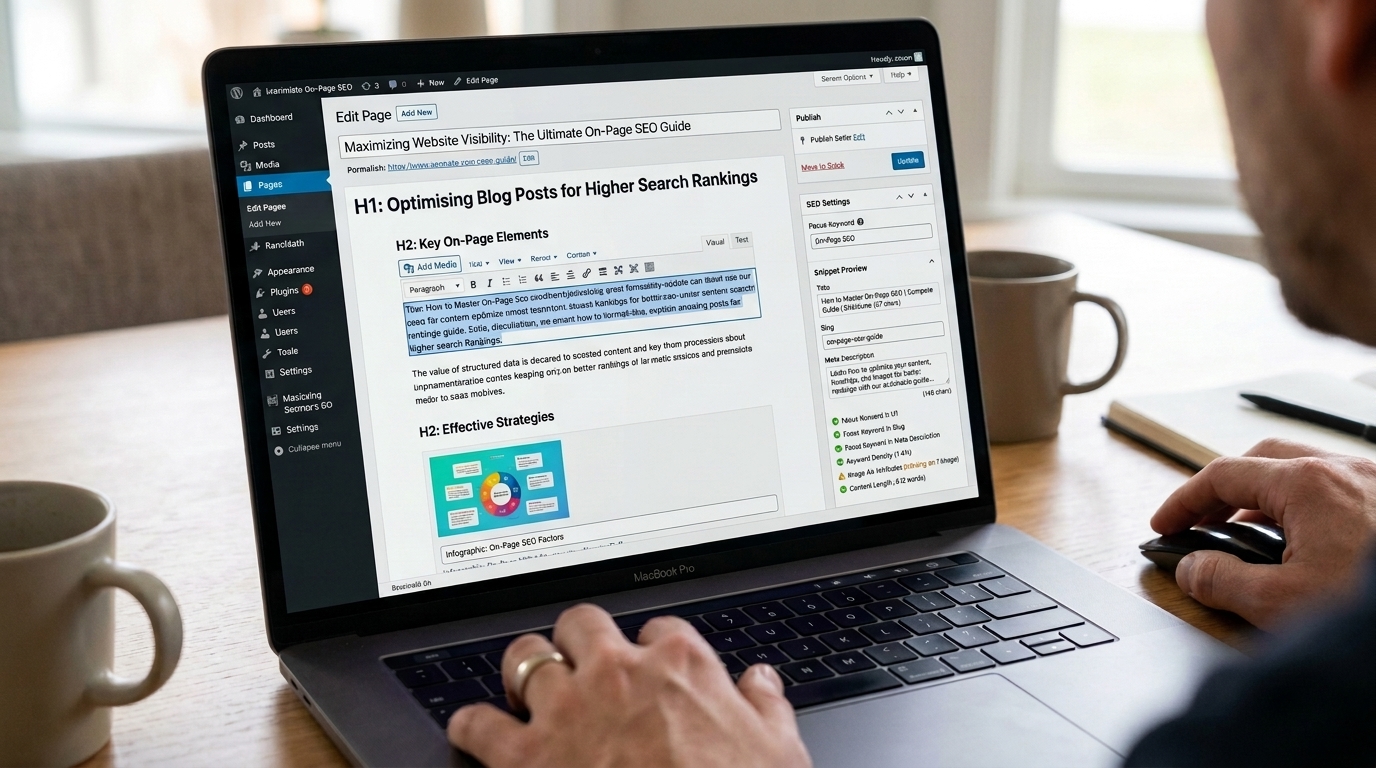
On page SEO services focus on improving every element within your website that influences search engine rankings and user experience.
Unlike activities that happen outside your website, such as link building or digital PR, on page search engine optimisation gives you direct control over the factors that affect your search visibility. From keyword research and content optimisation to page speed, structured data, and internal links, every improvement helps search engines understand your website while making it easier for visitors to find the information they need.
As search engine algorithms continue to evolve, successful businesses need more than basic optimisation. They need a structured SEO strategy that aligns with search intent, produces helpful content, and creates a positive user experience across every page.
In this guide, we’ll explain what on page SEO services include, why they matter for business growth, the process followed by experienced SEO specialists, and the best practices that help websites rank higher in search engine results pages.
What Is On Page SEO Service?
On page SEO services optimise individual web pages to improve search engine rankings. They involve improving the content, technical elements, structure, and user experience of each page so that both users and search engines can understand its purpose more effectively.
Simply put, on page SEO refers to every optimisation made directly within your own website. This includes updating page content, improving title tags, writing compelling meta descriptions, organising header tags, optimising images, refining URL structure, strengthening internal links, and improving technical SEO factors such as page speed and Core Web Vitals.
Unlike off page SEO, which focuses on activities such as link building, online mentions, and improving domain authority, on page SEO services provide full control over elements affecting search visibility. This means businesses can continually improve their websites without relying on external websites for results.
An effective SEO strategy combines both on page and off page SEO. While backlinks help establish authority, strong page optimisation ensures that search engines understand exactly what every page is about and why it deserves to appear in relevant search results.
Professional on page SEO services typically include:
- Comprehensive website audits
- Keyword research and keyword mapping
- Content optimisation
- Meta title and meta descriptions
- Header tags and page structure
- Image optimisation and image alt text
- Internal linking strategy
- URL structure improvements
- Schema markup implementation
- Technical SEO enhancements
- Core Web Vitals optimisation
- Performance monitoring through Google Analytics and Google Search Console
Each of these activities contributes to better search engine optimisation by making your website more accessible, relevant, and useful for your target audience.
Modern search engines no longer evaluate pages based solely on keywords. They assess content quality, relevance, page speed, mobile usability, and user engagement signals. As a result, successful on page SEO services require a balanced approach that combines technical expertise with high-quality content and a deep understanding of user behaviour.
Key Components of On Page SEO Services to Consider
Successful on page SEO services are built on several interconnected elements.
While each component contributes to search performance in a different way, they work together to improve rankings, user experience, and overall SEO performance. Ignoring one area often limits the effectiveness of the others. You can also make an on page seo checklist to build an effective strategy for every component.
Content Optimisation
Content remains at the centre of every successful SEO strategy. Search engines aim to provide users with the most relevant and useful information for their queries, which means content quality has a direct impact on rankings.
Content optimisation involves enhancing text for relevance, quality, and user engagement. It ensures that page content aligns with what users are searching for while meeting the quality standards expected by modern search engines. A typical content optimisation process includes:
- Reviewing existing content for accuracy and relevance
- Identifying content gaps compared to competitors
- Improving readability and structure
- Updating outdated information
- Expanding thin content with valuable insights
- Aligning content with user search intent
High-quality content answers user questions clearly and completely. Whether a visitor is looking for information, comparing solutions, or preparing to make a purchase, the content should provide a complete answer rather than forcing them to continue searching elsewhere.
An experienced SEO specialist will also analyse how users interact with content. Metrics from Google Analytics with insights from advanced SEO marketing tools can reveal whether visitors are engaging with the page or leaving quickly, helping identify opportunities for improvement.
Creating Content Around Search Intent
Search intent refers to the reason behind a search query. For example, someone searching for “what is on page SEO” is likely looking for educational information, while a user searching for “on page SEO services UK” may be actively seeking professional assistance.
Creating content that aligns with search intent helps:
- Improve rankings
- Increase user engagement
- Reduce bounce rates
- Improve conversions
- Enhance search visibility
Content that satisfies user intent sends strong relevance signals to search engines and contributes to long-term SEO success.
Keyword Research and Keyword Mapping

Keyword research identifies high-intent search terms for optimisation. Effective keyword research focuses on user search intent. In-depth keyword research uses industry-leading tools for best opportunities.
The goal of on page seo services is not simply to find popular search terms. Instead, businesses should identify relevant keywords that align with their products, services, and audience needs. SEO team should conduct keyword research to evaluate:
| Factor | Purpose |
| Search volume | Measures demand for a keyword |
| Search intent | Identifies user goals |
| Competition level | Assesses ranking difficulty |
| Conversion potential | Evaluates business value |
| Local relevance | Supports local SEO campaigns |
For businesses targeting specific geographic areas, local keywords become especially important. A UK-based company implementing local SEO for multiple locations target phrases that include locations, regional terminology, or service-specific searches that attract qualified leads.
Keyword Optimisation Best Practices
Once target keywords are identified, they need to be incorporated naturally throughout the page. Keyword optimisation includes placing keywords in titles and headings. Common placement areas include:
- Meta title
- H1 heading
- Subheadings
- Introduction
- Main content
- Image alt text
- URL structure
- Internal anchor text
However, it is important to avoid keyword stuffing. Search engines are highly effective at recognising natural language and semantic relationships between topics. Instead of repeating the same phrase excessively, focus on:
- Keywords naturally integrated into content
- Secondary keywords
- Related entities
- Topic relevance
- Semantic variations
This approach of on page seo services helps search engines understand the subject matter while maintaining a positive user experience.
The Importance of Keyword Mapping
Many websites unintentionally create competition between their own pages by targeting identical keywords. Keyword mapping aligns content with relevant search terms. A keyword map assigns specific target keywords to individual web pages, ensuring each page serves a distinct purpose.
Benefits of keyword mapping include:
- Reduced keyword cannibalisation
- Improved page relevance
- Clear content planning
- Better site structure
- More efficient content optimisation
When combined with thorough keyword research, keyword mapping creates a stronger foundation for long-term SEO performance.
Metadata Optimisation
Metadata often serves as a user’s first interaction with your website in search engine results pages. Even when a page ranks well, weak metadata can limit click-through rates and reduce traffic potential. On-page SEO includes optimising title tags and meta descriptions.
Meta Titles
The meta title appears as the clickable headline within search results and plays a significant role in both rankings and user engagement. Meta titles should include target keywords and stay within character limits. Effective title tags should:
- Be unique for every page
- Include primary target keywords
- Communicate page value clearly
- Remain concise and readable
- Encourage clicks
A well-written meta title improves both visibility and click-through performance.
Meta Descriptions
Although meta descriptions are not direct ranking factors, they strongly influence user behaviour and that’s why a part of on page seo services. Meta descriptions should clearly explain page content and encourage clicks. An effective meta description should:
- Summarise the page accurately
- Include relevant keywords naturally
- Highlight benefits or solutions
- Encourage users to visit the page
Importantly, Optimised metadata improves keyword ranking and click-through rates. Optimised metadata improves organic click-through rates. Effective metadata helps search engines understand page content better. Good metadata can significantly increase user engagement on websites.
When optimised correctly, metadata can become a powerful tool for attracting qualified traffic.
Image Optimisation
Images enhance content, improve engagement, and support user understanding. However, poorly optimised images can slow websites down and create technical SEO challenges. Image optimisation involves balancing visual quality with website performance.
Image Alt Text and Accessibility
Every image should include descriptive image alt text as part of effective on page seo services. Alt text helps:
- Search engines understand images
- Improve accessibility as per W3C guidelines
- Provide context when images fail to load
- Support image search visibility
The best alt text describes the image accurately while incorporating relevant keywords only when appropriate.
Image Compression and File Naming
Large image files can negatively affect page speed and user experience. Best practices include:
- Compressing image files
- Using modern formats such as WebP
- Implementing descriptive file names
- Maintaining image quality
- Optimising dimensions for different devices
Using descriptive file names and effective image optimisation helps search engines understand visual content more effectively.
Internal Linking and URL Structure
Internal linking is one of the most effective yet underused components of on page SEO services. A strong internal linking strategy creates clear pathways between related pages and helps both users and search engines understand website relationships.
Internal Linking Best Practices
Internal linking is one of the key on page elements that helps search engines navigate a website effectively. Internal links help users navigate and improve SEO understanding.
Effective internal links should:
- Connect closely related pages
- Use descriptive anchor text
- Support logical user journeys
- Distribute authority throughout the website
- Highlight important content
Using descriptive anchor text helps search engines understand the destination page while improving accessibility for users. A strategic internal linking framework contributes to stronger site authority and better indexation.
URL Structure Optimisation
URL structure is another important aspect of page optimisation. Optimised URLs should be short, descriptive, and keyword-rich. Examples of strong URLs include:
- /on-page-seo-services
- /local-seo-services
- /technical-seo-audit
Good URL structure should:
- Be easy to read
- Reflect page content
- Include relevant keywords
- Avoid unnecessary parameters
- Support overall website structure
Clear URLs improve both user trust and search engine understanding and is an integral part of on page seo services.

Technical SEO Foundations
While content and keywords receive most of the attention, technical SEO audit services ensure that search engines can access, crawl, and index your website effectively. Key technical SEO areas include:
- Crawlability
- Indexability
- Mobile usability
- Core Web Vitals
- Canonical tags
- Structured data implementation
Canonical Tags and Duplicate Content
Duplicate content can dilute ranking signals and create confusion for search engines. Canonical tags prevent duplicate content issues to protect ranking power. By identifying the preferred version of a page, canonical tags help consolidate authority and preserve search visibility.
Page Speed and Core Web Vitals
Technical performance remains a major ranking consideration and can be boosted by on page seo services. Page speed affects user experience and search engine rankings. Google’s Core Web Vitals assess:
- Loading performance
- Visual stability
- Interactivity
Websites that perform well in these areas supported by integrated on-page, off-page, and technical SEO services tend to provide a better user experience and stronger search performance.
Mobile Optimisation
With most internet users browsing on smartphones and tablets, mobile usability is essential. A mobile-friendly website should:
- Load quickly
- Display correctly on all devices
- Provide intuitive navigation
- Maintain readability without zooming
Search engines increasingly prioritise mobile-first indexing, making mobile optimisation a critical part of modern on page SEO services.
Schema Markup and Structured Data
Schema markup helps search engines understand page content better. It provides additional context about the information contained within a page and can improve how listings appear in search engine results. Common schema types include:
- Organisation schema
- Service schema
- FAQ schema
- Review schema
- Article schema
- Local business schema
Benefits of Structured Data
Implementing structured data can help:
- Improve search visibility
- Enhance search result appearance
- Increase click-through rates
- Support rich results
- Improve content understanding
For businesses, schema markup helps search engines understand important information about products, services, locations, and expertise. When combined with strong content, technical SEO, and strategic keyword optimisation, schema markup becomes an important component of comprehensive on page SEO services and supports data-driven digital growth strategies.
Why On-Page SEO Services are Important for Business Growth
Businesses often invest heavily in advertising to generate traffic, yet overlook the importance of improving the pages where visitors actually arrive. This is where on page SEO becomes valuable.
Organic Traffic
When your web pages are optimised around relevant keywords and search intent, they become more likely to appear in search engine results for queries your customers are already searching for. Rather than relying entirely on paid advertising, your website attracts qualified visitors through organic search.
User Experience
On-page SEO impacts user experience and engagement signals. Visitors expect websites to load quickly, display correctly on every device, and provide information that answers their questions without unnecessary effort. Well-structured content improves user experience and can lower bounce rates.
Higher Click Through Rates
Metadata also plays an important role in attracting clicks before visitors even reach your website. Optimised metadata improves organic click-through rates.
Meta titles should include target keywords and stay within character limits. Meta descriptions should clearly explain page content and encourage clicks. Effective metadata helps search engines understand page content better. Good metadata can significantly increase user engagement on websites.
Content Quality
High-quality content is essential for effective on page SEO services. Instead of producing content purely for algorithms, successful websites create helpful content that answers user questions. Content optimisation involves enhancing text for relevance, quality, and user engagement. This approach helps search engines understand the value of your page while increasing trust among internet users.
Page Performance
Page speed optimisation is crucial for improving load times and user experience. Google considers page speed a ranking factor. Fast-loading websites improve user experience and reduce bounce rates. Mobile-friendly websites are crucial as most users access sites on mobile. Page speed affects how search engines index your site.
Optimising images can significantly improve page load speed. These technical improvements not only enhance SEO performance but also create a better experience for every visitor.
Effective Navigation
Internal links help search engines navigate a website. Internal linking improves user navigation on a website. Effective internal linking can reduce bounce rates significantly. Internal links distribute SEO value across related pages.
A well-structured internal linking enhances site authority and helps in building the digital marketing strategy. By connecting relevant pages with descriptive anchor text, businesses help users and search engines discover valuable content across the website.
Faster Results
Another advantage of on page SEO services is that results can often appear sooner than many businesses expect. Initial ranking improvements can appear within one to two weeks of optimisation, particularly when technical issues have been limiting performance.
Although SEO remains a long-term investment, continuous improvements compound over time. Long-term SEO value can be achieved through continuous on-page optimisation and updates.
For companies looking to build lasting online visibility, investing in professional on page SEO services is one of the most effective ways to improve rankings, strengthen user experience, and generate consistent organic growth.
Want to Improve Your Website with Expert On Page SEO Services?
Effective SEO starts with getting the fundamentals right. Whether your goal is to increase organic traffic, improve search visibility, or generate more qualified leads, professional on page SEO services can help your website perform better while creating a better experience for your visitors.
At Smart Digitants, we combine in-depth keyword research, technical SEO, content optimisation, and data-driven strategies to deliver sustainable results tailored to your business goals. If you’re ready to strengthen your online presence and achieve long-term growth, get in touch with our team today for a tailored SEO strategy and discover how we can help your website rank higher and convert more visitors into customers.

Our Content Writing Team at Smart Digitants is a group of dedicated professionals, passionate about creating high-quality, engaging content.